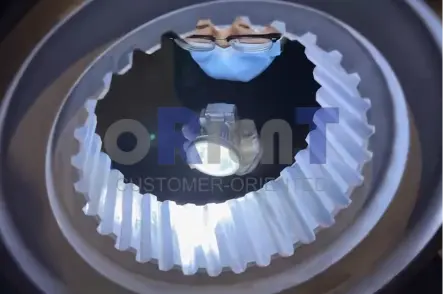
The permeation test (PT) is a non-destructive testing method that utilises capillary action to detect and visualise minute surface defects (such as cracks and pores) in materials:
Step 1: Pre-treatment
This is the foundation upon which the success of the inspection depends. All contaminants on the surface—including oil, rust, scale, and paint—must be removed using a specialised cleaning agent. Any contamination may block the defect opening, preventing the penetrant from penetrating and resulting in undetected defects.
Do not treat the surface using methods such as sandblasting or shot blasting, as these operations may deform the metal surface, rendering subsequent inspections ineffective.
Step 2: Penetration
Apply a penetrant containing a red dye (for colour detection) or a fluorescent dye (for fluorescent detection) evenly to the cleaned surface using methods such as spraying or brushing. It is usually necessary to wait for 10 to 30 minutes to allow the penetrant sufficient time to penetrate the micron-sized micro-cracks via capillary action. The ambient temperature during testing should ideally be between 10°C and 50°C. Low temperatures cause the penetrant to become viscous and reduce its flow properties, thereby affecting the penetration results.
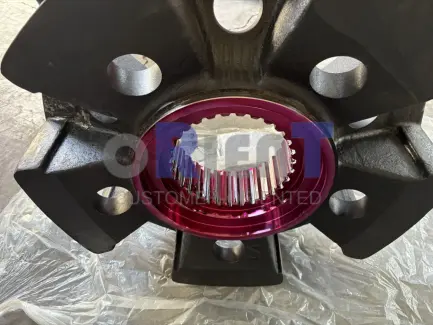
Step 3: Removal
Once the waiting time has elapsed, first use a clean cloth to wipe away most of the penetrant in a single direction, then gently wipe with a cloth dampened with a small amount of cleaning agent until the surface appears clean and free of any red residue. Under no circumstances should you rinse with water or spray cleaning agent directly onto the surface, as this will wash out the penetrant from the defects, resulting in missed defects.
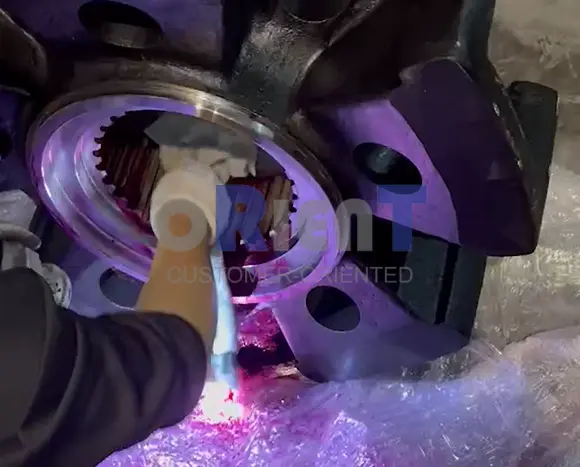
Step 4: Development
Spray a thin, even layer of white developer onto the dried inspection surface. The developer acts like blotting paper, using capillary action to draw the penetrant that had previously seeped into the defect opening back onto the surface of the workpiece. The extracted penetrant spreads out on the white background, forming a mark that is much larger than the actual defect. In this way, tiny cracks that were originally invisible to the naked eye are transformed into a highly conspicuous image.
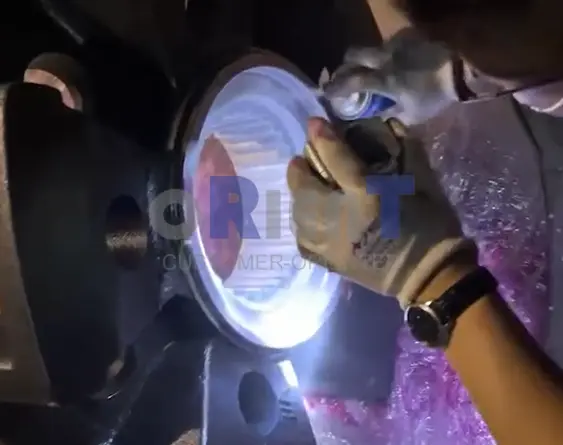
Step 5: Inspection
After applying the developer, wait for a short period (usually 7–30 minutes) before proceeding with the inspection.
Dye method: Inspect directly with the naked eye under bright white light (standard lighting with an illuminance of at least 500–1000 lux). Defects will appear as clear red lines or red dots.
Fluorescent method: This requires a dark room and illumination with a UV lamp (black light). Defects will emit a bright yellow-green fluorescence; this method offers higher sensitivity and can detect finer defects.